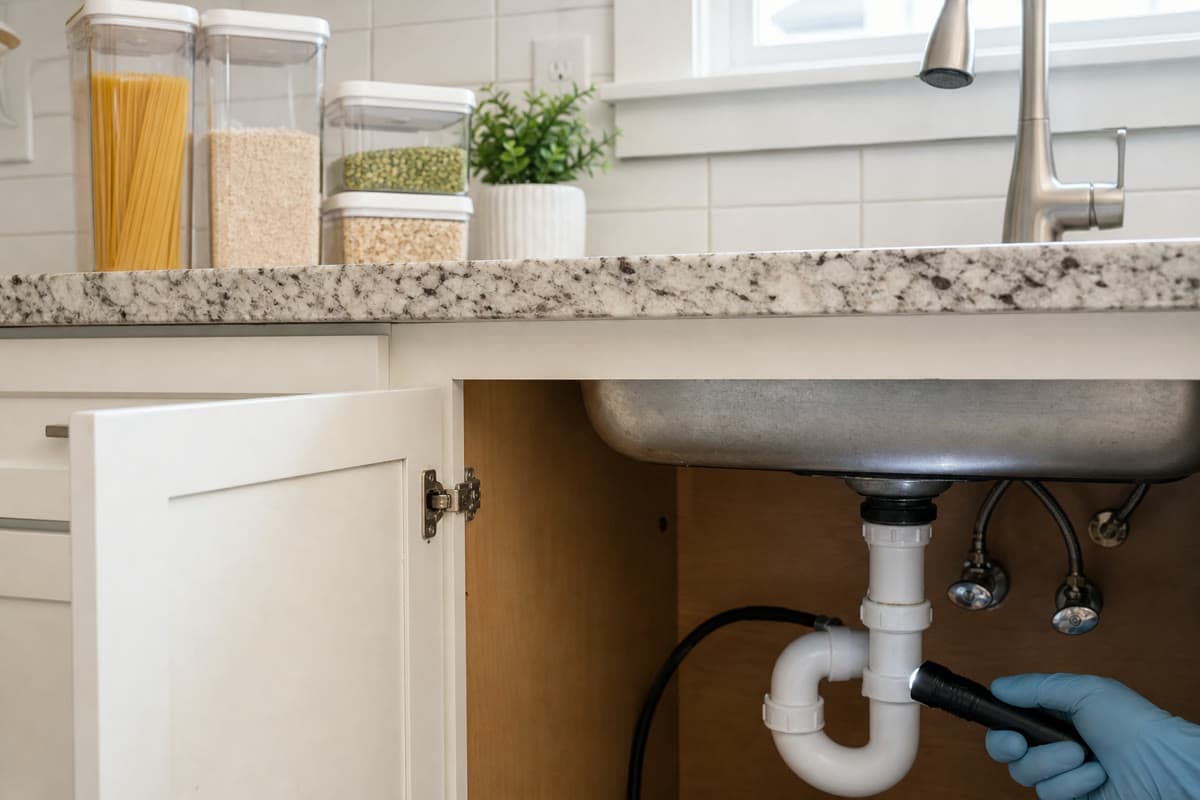
What this homepage is for
People land here after seeing ants on a counter, a deck, a slab crack, or a lawn mound and wanting a next action that is more specific than “call someone.” The honest next action on this domain is a matching request: you describe the activity, we offer that request to an independent company, and you decide whether to hire after reviewing credentials and a written scope. Ant Exterminator does not employ field crews, does not stock insecticides, and does not certify that a provider will accept every ZIP code.
That framing matters because ant problems are not one product. A grease trail in a restaurant dish pit, a carpenter satellite nest in a damp header, and a red imported fire ant mound in a quarantined county are different jobs. University of California Statewide IPM emphasizes following trails, inspecting moisture and utility penetrations, sanitation, exclusion, and species-appropriate bait—not a single indoor aerosol. The Environmental Protection Agency’s consumer ant page likewise treats identification and label-directed products as the consumer’s safety baseline. This page translates those public-source ideas into a matching checklist, not a treatment recipe.
Foraging trails versus evidence of a nest
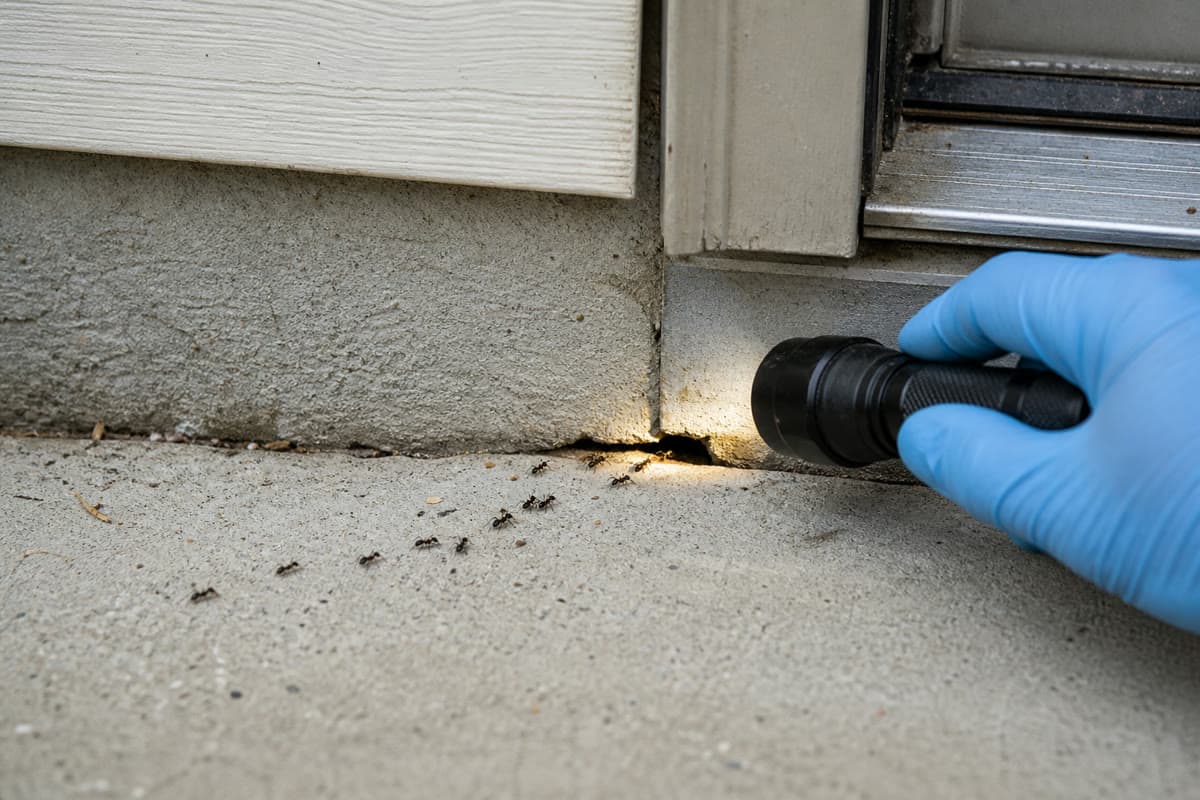
Workers you can see are usually scouts or foragers. They may commute from a nest in a wall void, under a slab, in landscape mulch, or even from a neighboring lot. Wiping the visible line without recording its path often sends the next wave along a slightly different route. Photograph the trail at the entry (pipe chase, door threshold, expansion joint) and at the food or water stop. Note whether ants cluster on sweets, protein, or standing water. Those notes help a provider choose inspection lighting and bait class; they do not replace a walkthrough.
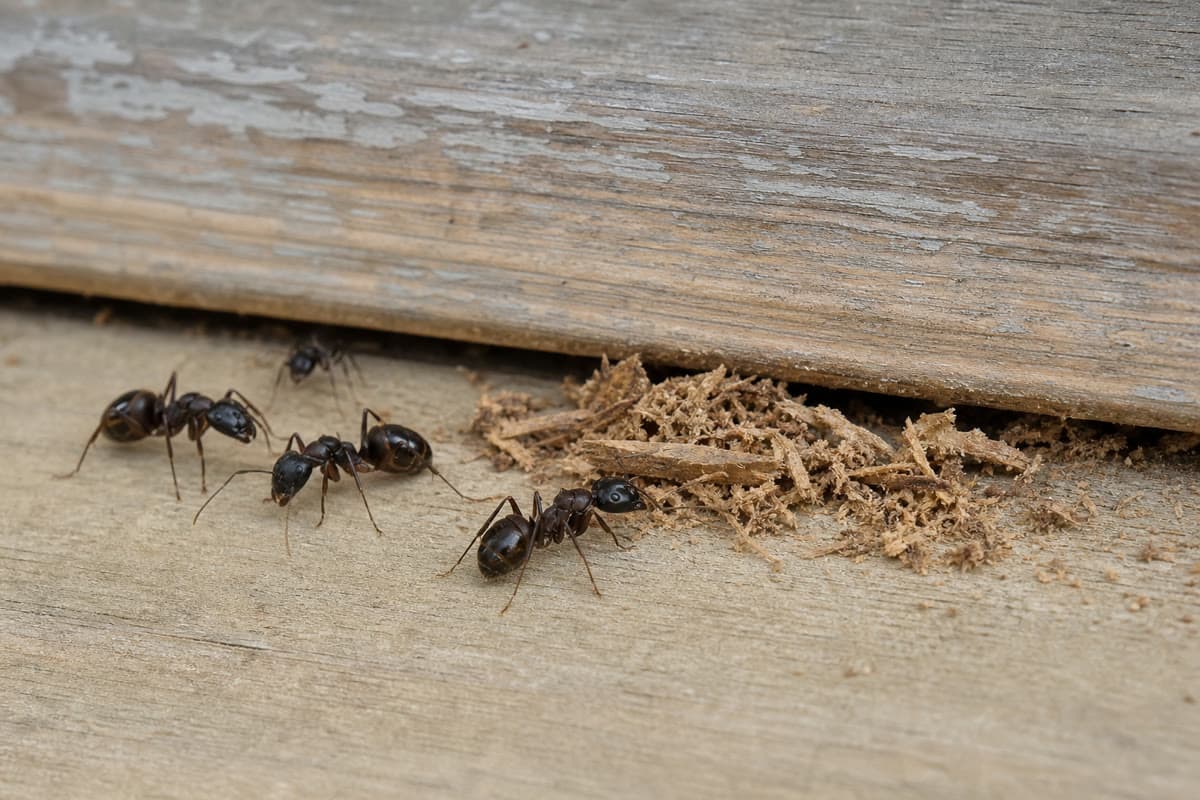
Nest clues differ by group. Soil pellets or volcano-shaped mounds in turf raise fire-ant questions in the southern and southwestern United States. Coarse, sawdust-like frass with insect parts near window sills or attic hatches raises carpenter-ant questions, especially where wood has stayed wet. Smooth indoor trails along baseboards with a rotten-coconut odor when crushed are consistent with odorous house ants in many regions, while Argentine ants in much of California form huge interconnected colonies that ignore simple “one mound” thinking. None of those field marks should be treated as a lab identification. If you cannot safely collect a sample, say so on the form rather than guessing a common name.
Three species groups that change the inspection plan
Carpenter ants and wet wood
University of Minnesota Extension notes that parent nests are commonly associated with moist or decayed wood, while satellite nests may occupy drier voids. A provider who only sprays a kitchen trail while a leak feeds a header will likely see ants return. Ask whether the visit includes attic, crawlspace, or exterior wood inspection and whether moisture correction is listed as owner work versus contracted work. Do not assume carpenter activity equals imminent collapse; ask what was actually found.
Imported fire ants and regulated materials
USDA APHIS maintains the federal imported fire ant quarantine. It is a movement rule for regulated articles, not a promise that every lawn in Alabama, Texas, or Florida has a mound. If you are shipping sod, nursery plants, or soil-moving equipment, read the current APHIS map and state companion rules. For a residential sting-risk conversation, describe mound locations, recent flooding, and whether children or pets use the turf. A matched applicator still chooses lawful products from the label and local rules.
Argentine, odorous house, and other trail-dominant indoor ants
UC IPM identifies Argentine ants as the most common household ant in much of California and warns against copying a California bait program to another state without identification. Odorous house ants and related trail species often respond poorly to repellent sprays that split colonies. The homepage job is not to prescribe a gel; it is to tell you to capture photos of trails at night and daytime, list sanitation limits (pets, kids, food service), and request a provider who will talk about non-repellent baits and exclusion instead of a one-visit knockdown claim.
What a useful inspection record should include
Before you hire, you should see a written note of suspected species or “undetermined,” mapped activity rooms, moisture or food sources the inspector actually observed, proposed products with EPA registration numbers if pesticides are offered, preparation steps, follow-up timing, and who pays if activity continues. Inspection fees may apply even if you decline treatment. This site cannot quote those fees. If a caller promises same-day colony wipeout without walking the property, treat that as a sales claim to verify, not as a fact from Ant Exterminator.
Commercial kitchens, grocery back rooms, and health-inspected facilities should add pest-sighting logs, last professional service date if known, and whether ants appeared after a remodel that opened wall voids. Residential callers should mention pets, fish tanks, and whether anyone has a history of severe reactions to stings. Those details change how a provider stages baits; they are not a medical diagnosis. Seek emergency care for severe allergic reactions rather than waiting on a matching form.
Seasonal pressure is a planning aid, not a calendar guarantee
Outdoor colonies in temperate climates often slow in cold soil while indoor satellite nests near heat remain active. Spring warming increases brood production and winged reproductives in many species. Summer foraging is easiest to photograph. Fall indoor invasions rise as outdoor honeydew and insects decline. Those patterns, summarized from extension seasonal notes, help you time documentation. They do not prove that August is “peak” at your address or that winter is a safe time to ignore carpenter frass. Local weather, irrigation, and building leaks override the cartoon calendar.
Guides on this site that answer a different job than this homepage
Use the homepage to decide whether to request a match. Use service and education URLs when you already know the topic. Carpenter and fire-ant service cards describe conversation starters with a provider; they are not menus of guaranteed treatments. Cost and DIY comparison pages, when you open them, should be read as scope factors rather than advertised prices—this homepage does not republish dollar ranges because this company does not set them.
- Carpenter ant service overview — wood, moisture, and satellite-nest questions.
- Fire ant service overview — mounds, turf use, and quarantine context.
- Ant identification — what to photograph before an inspection.
- Contact and quote request — intake fields, phone, and questions to ask a matched company.
- Editorial policy — how claims are sourced and corrected.